Blackness Blooming—A Gathering on the Afterlives of Exile
Zeitz MOCAA presents Blackness Blooming, a symposium that delves into the complex experiences of exile and the aftermath of displacement as explored in the exhibition A Protea Is Not a Flower. The symposium title quotes Don Mattera’s poem, Blackness Blooms, which he wrote while in solitary confinement. The last stanza reads:
Ah, black sunbeams fall on the slope
Bringing new light to fulfil my hope
Ever conscious of their sacred duty
Then sweet, sweetly my blackness blooms
And becomes my beauty
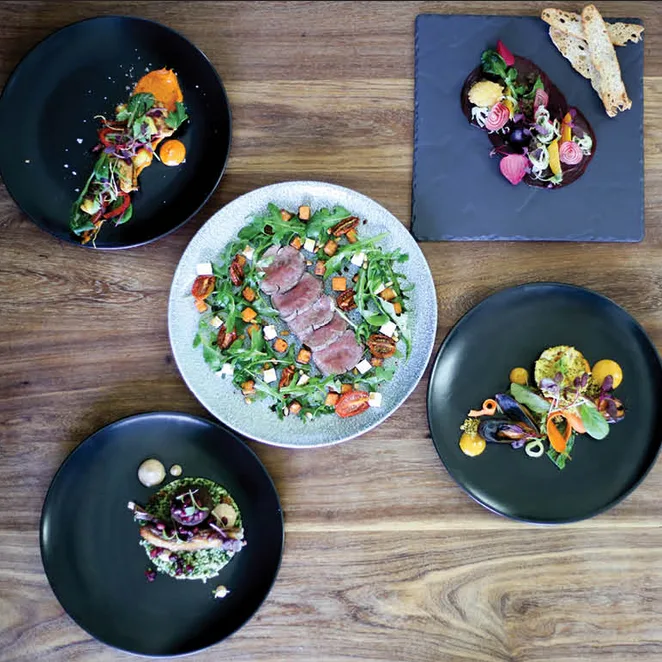
Framed as a gathering, the symposium centres poetry, speculative fiction, and a renewed imagination of Blackness as a lived experience. The day will be divided two parts; the first session offers an intergenerational reflection of the exhibition facilitated by educators in the BMW Centre for Art Education. This is followed by a keynote address by Kea Mosienyane and conversation around exile, homemaking, and Bessie Head’s life and literature. The second session includes a film screening as well as a participatory reading group on South African Modernist artists and their labour. Symposium guests are invited to stay throughout the day or participate in either session. Readings will be available via a link in bio, and a light meal will be provided.
Date & Time
Saturday, 31 October 2026 | 10 am – 6 pm
Venue
Zeitz MOCAA Scheryn Arena, Level 0
Entry
Access with standard museum admission of R350 per person for tickets purchased via Webtickets.
South African and African citizens pay R199 per person on presentation of South African ID or African passport when purchasing tickets on site at the museum.
Free to Zeitz MOCAA members on presentation of valid membership.
Meet the Participants
Lerato Shadi
Lerato Shadi is a South African artist currently living and working in Berlin, Germany. Shadi graduated from the University of Johannesburg in 2006 with a Bachelor of Arts in Visual Art and completed her Master of Arts in Spatial Strategies from the Weißensee Academy of Art in Berlin in 2018. Working across performance, video, and installation, Shadi interrogates assumed colonial narratives and critiques practices of historical erasure as mechanisms of violence against marginalised peoples. She challenges the politics of representing Black womanhood, centring her lived experience by using her body in repetitive interventions. She employs time and duration to reflect on labour and its value in society, with her actions and gestures functioning as devices that speak to the ritualistic quality of the mundane.
Shadi has held multiple solo shows dating since 2007 with recent presentations including, Tsela e e motsopodia, Blank Projects, Cape Town, South Africa (2025); Maropeng, Galerie im Turm, Berlin, Germany (2022). She has also participated in numerous group exhibitions both internationally and locally, including Everything Is True—Nothing Is Permitted, Brutus, Rotterdam, Netherlands (2025); We, The People: 30 Years of Democracy in South Africa, Norval Foundation, Cape Town, South Africa (2024); Who We Are: Reflecting a Country of Immigration, Bundeskunsthalle, Bonn, Germany (2023), among others.
Robin Rhode
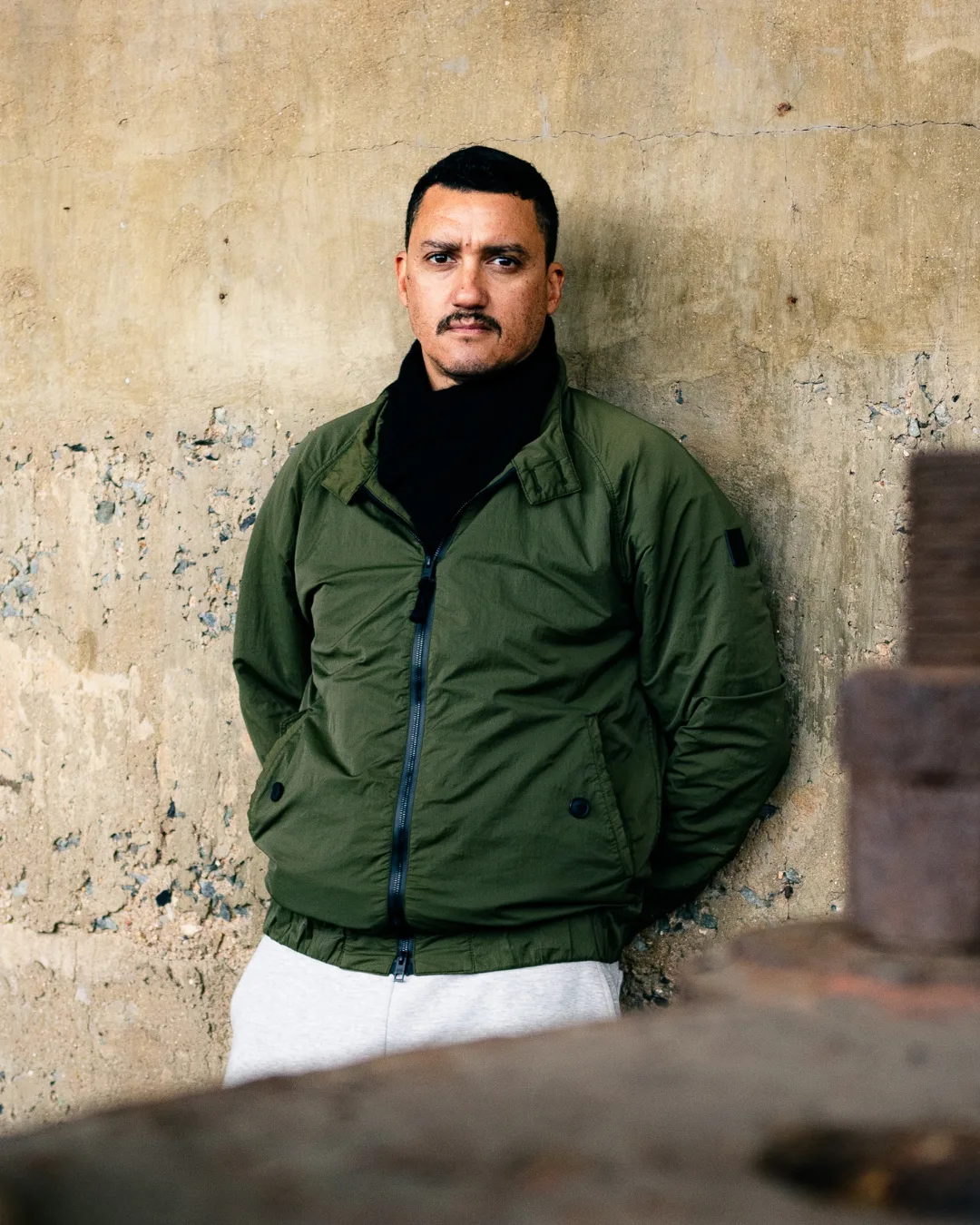
Robin Rhode is a multi-disciplinary artist currently living and working in Berlin, Germany. Rhode intervenes in the built environment of the city, drawing attention to the often-unseen histories and social conditions of a site and its surroundings. Taking inspiration equally from youth street culture and art history, Rhode’s artistic practice treats the city wall as an expanded canvas. He employs a range of visual strategies and media— including painting, performance, and photography—to create surprising and critical artworks that refuse stasis and remain in motion, defying any singular definition.
Rhode has held numerous solo exhibitions since 2003, with recent presentations including, Fragments in the Sun, Noack Gallery, Berlin, Germany (2025); African Dream Root, Lehmann Maupin, New York, United States (2023); Robin Rhode, Museum Voorlinden, Wassenaar, Netherlands (2022). Rhode’s recent group shows include Corps et âmes, Bourse de Commerce, Paris, France (2025); Imagining Black Diasporas: 21st-Century Art and Poetics, Los Angeles County Museum of Art, United States (2025); Ring of Fire, Kistefos Museum, Oslo, Norway (2025); Fragile Beauty: Photographs from the Sir Elton John and David Furnish Collection, Victoria and Alfred Museum, London, United Kingdom (2024), among others.
Lee Walters
Lee Walters is a postdoctoral research fellow at the University of the Western Cape’s Centre for Humanities Research, in the UK-SA (British Academy-NRF) Bilateral Chair in Culture and Technics. Lee completed her PhD at UWC’s Department of Women’s and Gender Studies. Her ongoing work attends to how culture and techniques in and of labour, race and gender influence historical, structural and psychosocial dynamics in arts and culture worlds, including the cultural and creative industries, in southern Africa and elsewhere.
Keamogetse Mosienyane
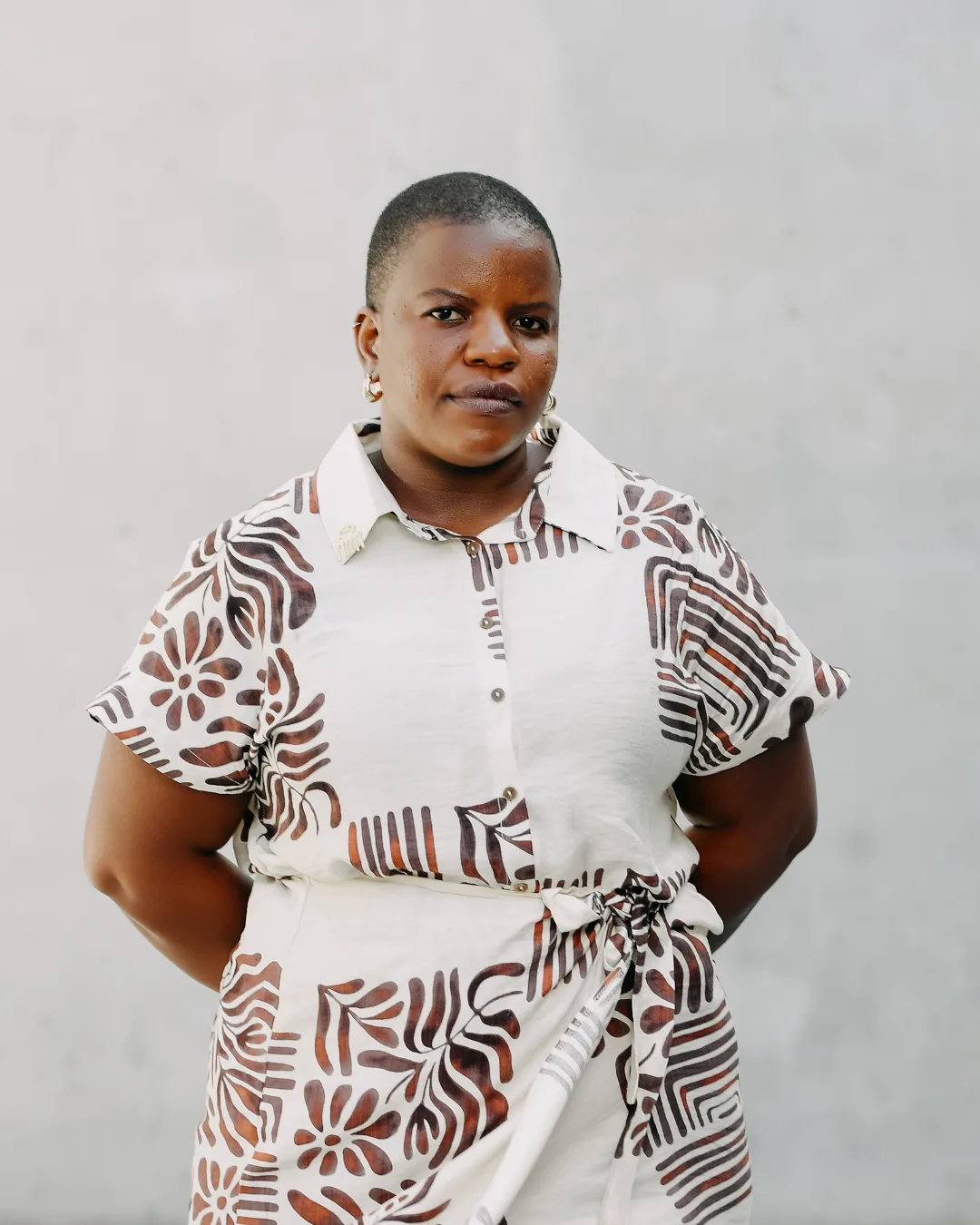
Keamogetse Mosienyane is a Motswana interdisciplinary researcher, cultural worker, and curator. Her practice engages questions of space, temporality, and structure, examining how Black spatial imaginaries are formed and negotiated across different scales and borders. With academic grounding at the African Centre for Cities and in Historical Studies at the University of the Western Cape, she brings a research-led approach to contemporary curatorial practice.
She is currently a 2026 ARAK Collection curatorial fellow, where her project draws on the Setswana concept of lefatshe to explore landscape, belonging, memory and ways of relating to land. Her recent institutional experience includes the 2025 fellowship programme at the Zeitz Museum of Contemporary Art Africa and the curatorial internship programme at the Canadian Centre for Architecture. She is also a contributor to the Botswana-based collective Banana Club, where she supports curatorial research and public programming.
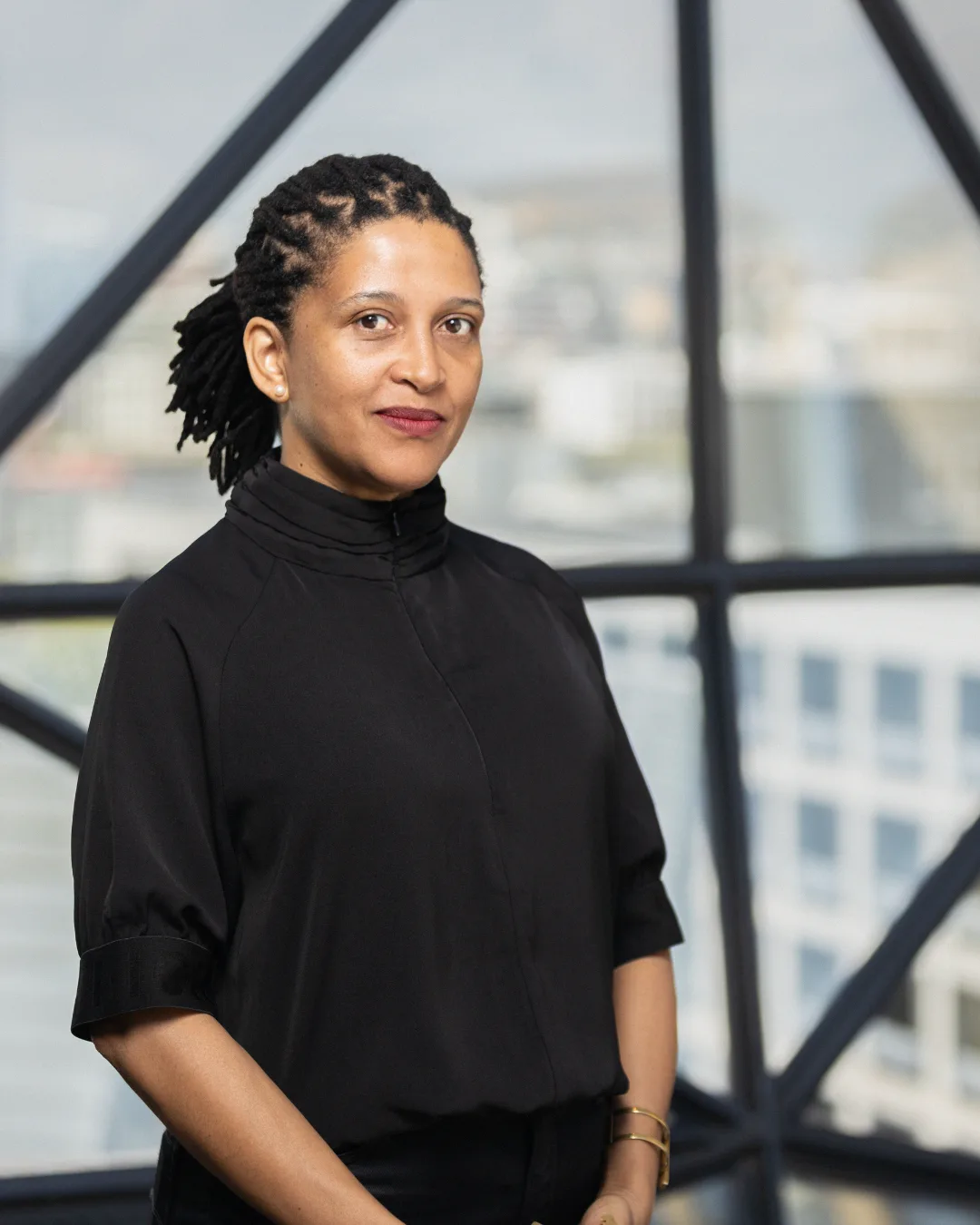
Mmakhotso Lamola
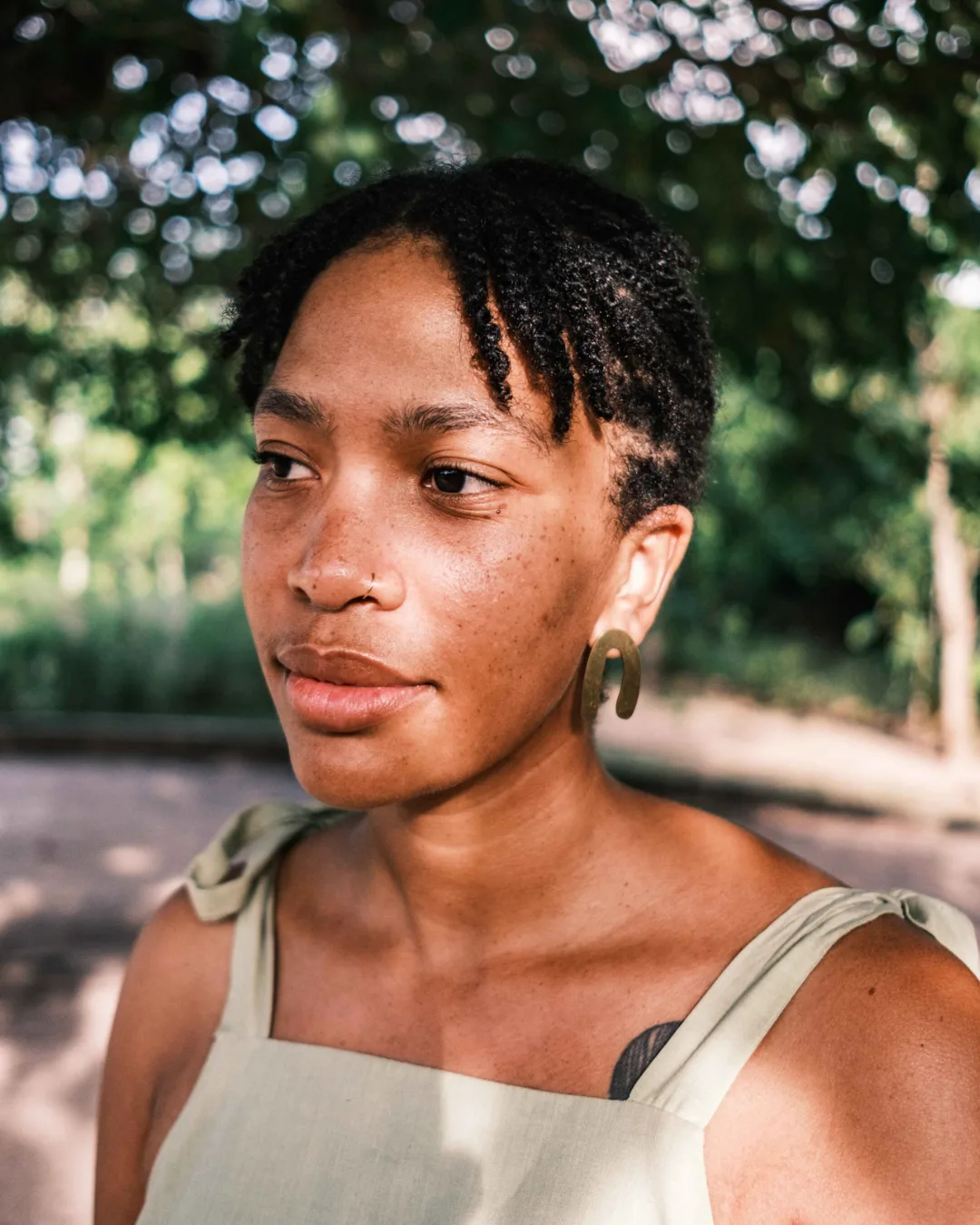
Photo: Victor Adewale
Lerato Shadi is a South African artist currently living and working in Berlin, Germany. Shadi graduated from the University of Johannesburg in 2006 with a Bachelor of Arts in Visual Art and completed her Master of Arts in Spatial Strategies from the Weißensee Academy of Art in Berlin in 2018. Working across performance, video, and installation, Shadi interrogates assumed colonial narratives and critiques practices of historical erasure as mechanisms of violence against marginalised peoples. She challenges the politics of representing Black womanhood, centring her lived experience by using her body in repetitive interventions. She employs time and duration to reflect on labour and its value in society, with her actions and gestures functioning as devices that speak to the ritualistic quality of the mundane.
Shadi has held multiple solo shows dating since 2007 with recent presentations including, Tsela e e motsopodia, Blank Projects, Cape Town, South Africa (2025); Maropeng, Galerie im Turm, Berlin, Germany (2022). She has also participated in numerous group exhibitions both internationally and locally, including Everything Is True—Nothing Is Permitted, Brutus, Rotterdam, Netherlands (2025); We, The People: 30 Years of Democracy in South Africa, Norval Foundation, Cape Town, South Africa (2024); Who We Are: Reflecting a Country of Immigration, Bundeskunsthalle, Bonn, Germany (2023), among others.
Tom Holzinger
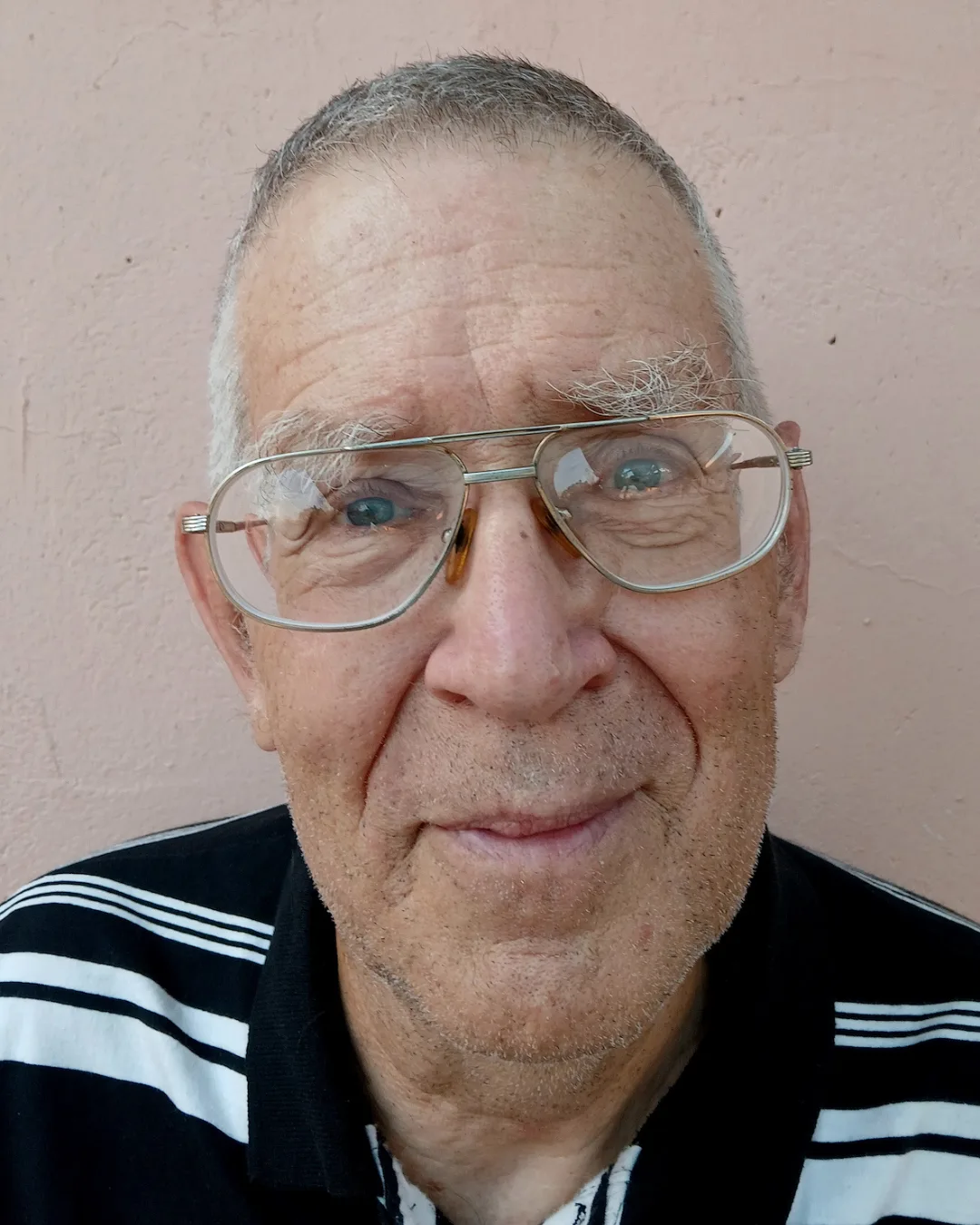
Tom Holzinger was born in August 1947 in the US. He grew up in “Middle America” and completed two years of university. The American war in Vietnam then threatened all young men of his age group, and Tom chose to leave the US. In July 1967, at age 19, he arrived in Botswana and began work at the Swaneng Brigades in Serowe. He did his best to train young farmers in modern animal husbandry.
At the end of that year, Tom travelled to Francistown, where he met the young Mxolisi “Ace” Mxgashe who in turn led him to Bessie Head. She was in the Tati Hotel bar, holding forth with beer and cigarettes surrounded by a crowd of eager South African men. She acknowledged Tom and Ace with a simple wave of her hand.
Tom did not meet her again until late 1969, when Bessie moved to Serowe so that her son Howard could receive good non-racial schooling. She built a little two-roomed house – “Rain Clouds” – close to Swaneng School and the Farmers’ Brigade.
Bessie and Tom immediately became long-term friends. He would knock off work and pass by her house. Often she would show him her latest efforts in her front garden and invite him in for tea and scones. For several years they discussed every topic under the sun – except her personal history. It remained a mystery.
Tom returned to North America in 1974, where he worked as a printing pressman for a decade. In 1980 he met and later married Rebecca Dyck, a Canadian comrade with the ANC. In 1983 they moved to Montreal, Canada, where they raised two boys. Tom later naturalised and became a scientific editor.
Also in 1983 he finally met Harold Head, Bessie’s ex-husband, then living in Toronto. Howard had gone to Toronto for tertiary education, had gotten into serious trouble, and now his father sought help. In a few days Howard arrived in Montreal. After two months, Howard agreed that he was best off in Botswana, and Tom sent him back to Bessie. When Bessie died in April 1986, it was again Harold’s voice on the phone that let him know.
In 2004 Tom moved back to Serowe. In 2007 he helped organise the Bessie Head Heritage Trust. Together with the Serowe Museum he worked to have her house be declared a national monument, something accomplished in 2012. He looks forward to the restoration of her little house in the coming year, after which it will stand as a public testimony to her life and work.
Zeitz MOCAA’s exhibition and curatorial programming is generously supported by the Mellon Foundation and BMW South Africa.